Get 10% off your first order / - 10 % sur votre première commande

Why Productivity Can’t Fix Burnout (No Matter How Organised You Are)
Working harder won’t cure burnout. Discover why productivity can hide emotional exhaustion and what actually helps you recover.
BURNOUT
Camelia Sandu (Luna Skye)
7/21/20265 min read
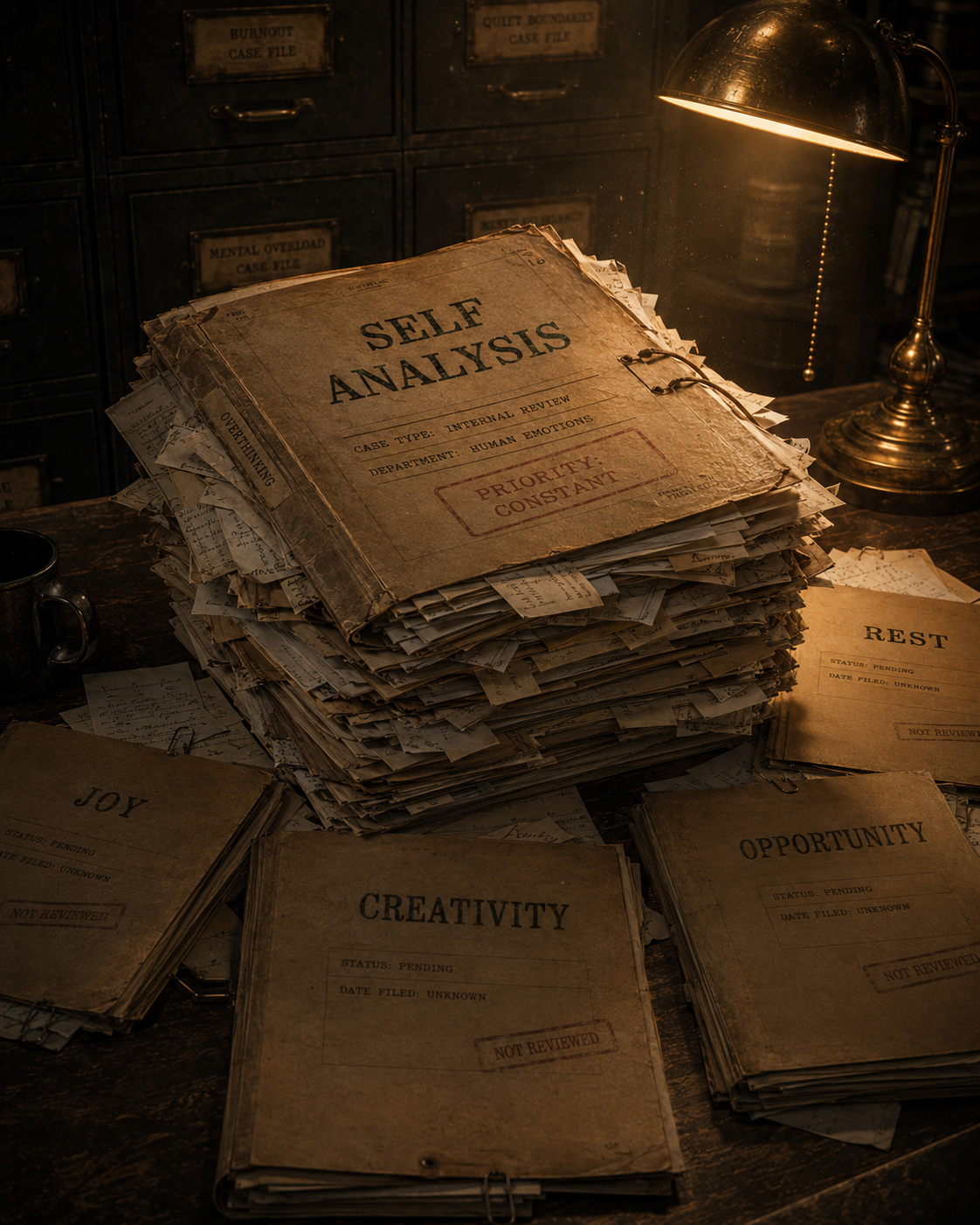
Why Productivity Can’t Fix Burnout
The to-do list keeps getting longer.
So you make a better one.
You buy a nicer notebook.
Download another productivity app.
Colour-code your calendar.
Wake up thirty minutes earlier.
Watch a video called “Ten Habits of Highly Effective People Who Also Somehow Have Time to Fold Fitted Sheets.”
For a little while, it helps.
You feel organised.
In control.
Hopeful.
Then, a few days later, the familiar exhaustion returns.
Not because your system failed.
Because productivity and recovery are not the same thing.
Productivity is excellent at solving the wrong problem.
When life feels overwhelming, organising it feels reassuring.
Making lists creates order.
Crossing off tasks gives your brain a small reward.
Behavioural science shows that completing tasks triggers the brain’s reward system, releasing dopamine, which can briefly boost motivation and create a sense of progress.
That’s not a bad thing.
The problem is when we mistake that feeling for recovery.
You may be ticking off tasks while quietly running out of emotional energy.
One measures what you’ve done.
The other measures what you’ve spent.
They’re not the same account.
High achievers often mistake coping for healing.
The people most vulnerable to burnout are rarely the least capable.
They’re often the most dependable.
The ones who volunteer.
Who solve problems before anyone asks.
Who stay late because “it’s easier if I just do it.”
Who carry everyone else’s emergencies as if they were their own.
Productivity becomes part of their identity.
Slowing down doesn’t just feel uncomfortable.
It feels like becoming someone else.
So they keep producing.
Long after their emotional reserves have begun to disappear.
Filed Observation 12-D
Archive analysis found that many individuals responded to exhaustion by increasing efficiency rather than reducing pressure.
Productivity improved.
Wellbeing did not.
Why doing more can feel strangely comforting.
There’s a reason many people throw themselves into work during difficult periods.
Doing something feels better than feeling something.
If you’re grieving, anxious, overwhelmed or emotionally exhausted, another task offers a temporary escape.
The inbox becomes easier to manage than your emotions.
The kitchen is easier to organise than your thoughts.
The spreadsheet is more predictable than uncertainty.
None of this means you’re avoiding your feelings on purpose.
It means your brain is choosing the problem that seems solvable.
Burnout doesn’t care how efficient you are.
Imagine trying to drive a car with almost no fuel.
A better route planner might help you travel a little farther.
Smoother driving might improve efficiency.
But eventually, the car still needs fuel.
Burnout works in much the same way.
A more organised calendar may reduce unnecessary stress.
Better time management can absolutely help.
But neither replaces emotional recovery.
No productivity system can generate energy that no longer exists.
The invisible work that never appears on your checklist.
Most to-do lists contain visible tasks.
Send the email.
Buy the groceries.
Attend the meeting.
What they rarely include is everything happening quietly in the background.
Remembering your child’s school trip.
Checking if your parents are okay.
Wondering whether your friend sounded upset.
Planning next week’s meals.
Keeping track of birthdays.
Replaying yesterday’s conversation.
Managing your own emotions while helping everyone else manage theirs.
This invisible workload is often where burnout grows.
Not because it’s dramatic.
Because it never really stops.
Sometimes the most productive thing you can do is stop producing.
That sentence can feel almost uncomfortable to read.
Many of us have learned that our value comes from usefulness.
If we’re resting, we’re wasting time.
If we’re not achieving, we’re falling behind.
But recovery follows different rules.
Sometimes progress looks like:
Leaving something until tomorrow.
Asking someone else to help.
Choosing the simpler option.
Accepting “good enough.”
Taking your lunch break away from your desk.
None of these would impress a productivity guru.
They might, however, impress your nervous system.
Success becomes very expensive when it costs you yourself.
There comes a point where doing more no longer gives you more.
It simply asks for more.
More patience.
More attention.
More emotional energy.
More resilience.
Eventually the price becomes unsustainable.
Success is meant to support your life.
Not quietly consume it.
That doesn’t mean ambition is unhealthy.
It means ambition needs somewhere safe to rest.
Archive Note 02-F
Numerous records identified exceptional organisational skills, immaculate calendars and consistently completed task lists.
Further inspection revealed these files had been incorrectly stored under “Thriving.”
They have since been reclassified as “Running on Empty.”
Practical Takeaways
If productivity has become your response to exhaustion, try asking:
Am I organising my workload or avoiding my feelings?
Which task genuinely needs doing today?
Which one simply makes me feel temporarily in control?
What would happen if one item stayed unfinished?
When did I last feel productive and peaceful?
You don’t have to abandon productivity.
You just don’t have to expect it to solve emotional problems it was never designed to fix.
A Note from the Archive
If this article felt familiar, Emotional Documentation explores the quiet pressure of always coping, always producing and always appearing fine.
Not through advice.
Through carefully documented records of experiences many people recognise but rarely describe.
Sometimes the most important file isn’t the one marked Completed.
It’s the one labelled Needs Rest.
Related Files
What High-Functioning Burnout Really Looks Like
Burnout Isn’t Just Being Tired
Why Rest Doesn’t Always Feel Restful
Emotional Exhaustion Explained
Understanding Burnout: The Ultimate Guide
Frequently Asked Questions
Can working harder make burnout worse?
Yes. Continuing to increase your workload without adequate recovery can deepen emotional and physical exhaustion.
Why do I become more productive when I’m stressed?
Many people respond to stress by seeking control. Organising tasks and staying busy can provide temporary relief, even if the underlying stress remains.
Is productivity a coping mechanism?
It can be. For some people, staying constantly busy becomes a way to avoid difficult emotions or regain a sense of certainty.
Can good time management prevent burnout?
Good organisation can reduce unnecessary stress, but it cannot replace rest, healthy boundaries or emotional recovery.
Why do I feel guilty when I’m not being productive?
Many of us learn to associate self-worth with achievement. That belief can make rest feel uncomfortable, even when it’s essential.
What actually helps burnout recovery?
Recovery often involves reducing chronic stress, allowing meaningful rest, setting boundaries, seeking support and recognising that recovery takes time.
Can successful people experience burnout?
Absolutely. In fact, highly conscientious, dependable and high-achieving people are often at greater risk because they’re more likely to ignore early warning signs.
Official Archive Note
The human brain has never been particularly fond of unanswered questions. It prefers complete files, clear conclusions and neatly labelled certainty, even when life refuses to provide them.
That idea runs throughout Emotional Documentation, where life’s unfinished emotional paperwork is finally given somewhere to live. Through archive files, certificates and official records, the book gently reminds readers that uncertainty doesn’t mean something is wrong. Sometimes it simply means you’re human.
Explore the book:
Amazon US: https://a.co/d/0a5GfmkF
Amazon UK: https://amzn.eu/d/0cv3P909
Write Your Story
Wellness, laughter, and connection, one page at a time.
CONNECT
© 2025 Inkstoryhub. All rights reserved.
JOIN THE WAITLIST / REJOINDRE LA LISTE D'ATTENTE
(get updates, challenges, and secret launches) / (recevez des actus, des défis et des lancements secrets